

Textile: cut your energy costs with smart monitoring
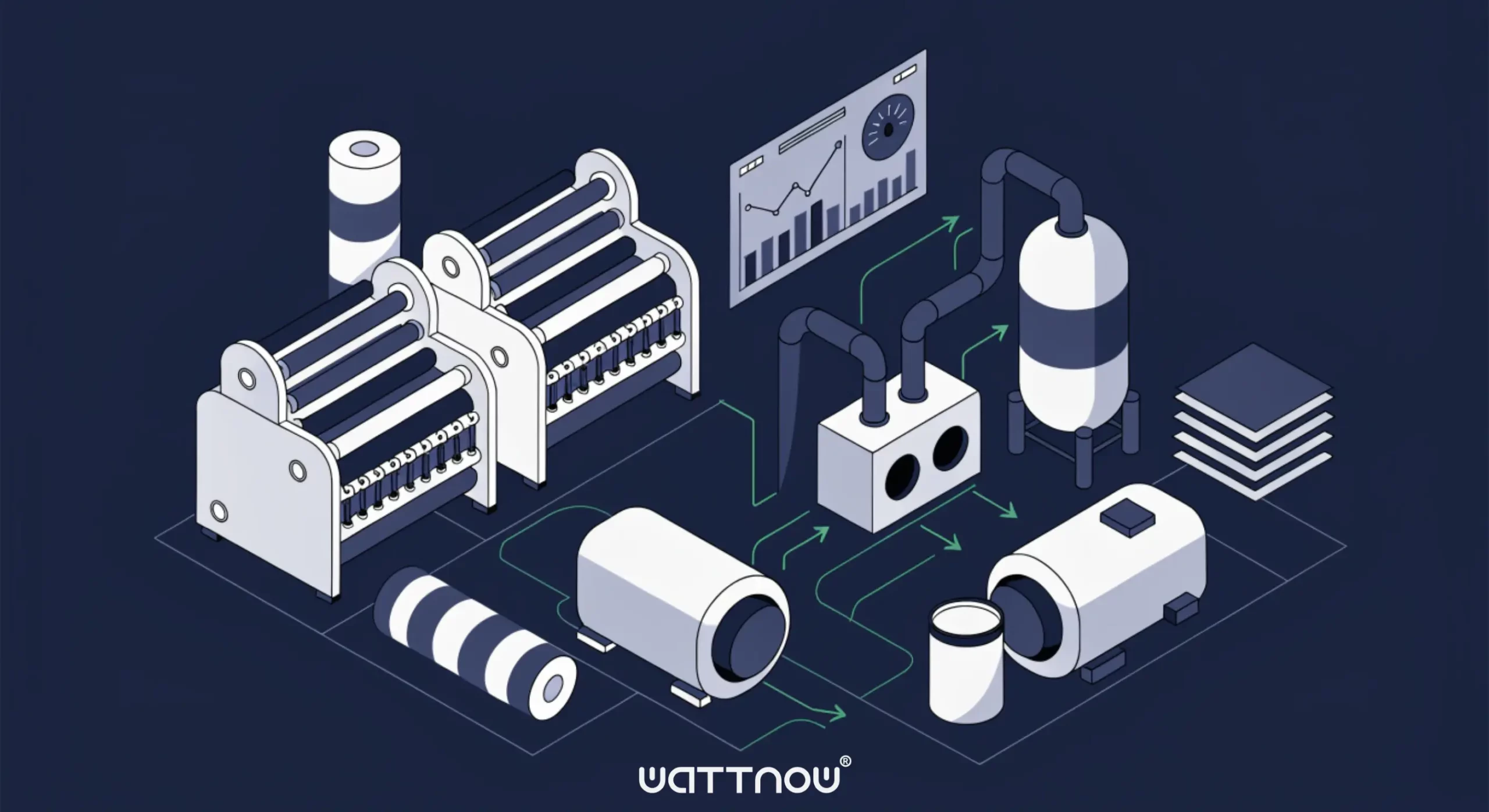
In a textile factory, energy is a heavy cost. Yet a good share of that spend is avoidable. A Tunisian textile factory proved it with Wattnow. The exact figures, area by area, are in the case study. Download it to see what it recovered, and how.
The textile sector and its energy challenge
The textile industry is one of the most energy-intensive sectors. In North Africa, and particularly in Tunisia, it is a major economic pillar, but also a considerable source of electrical and thermal consumption.
Main consuming areas, from most to least intensive:
- Wet processing and thermal processes (dyeing, washing)
- Drying and heat-setting
- Compressed-air generation
- Lighting, ventilation and air conditioning
- Motors and drives
📌 The stakes: With rising energy prices and growing regulatory pressure, controlling consumption is becoming a key competitiveness factor for textile companies.
in the case study
Energy intensity varies widely from one process to another. Wet processing stays the most demanding. The case study gives the benchmarks measured on a Tunisian factory.
Challenges specific to the textile sector
Thermal processes
Dyeing, drying and heat-setting require precise temperatures. Without fine control, overheating and inefficient cycles generate significant energy waste.
Production variability
Shifting orders, color changes and machine stops create consumption swings that are hard to anticipate without proper monitoring tools.
Ageing equipment
Many textile factories run on older machines whose energy efficiency degrades. Without data, it is impossible to prioritize modernization investments.
Multi-site and silos
Textile groups often operate several sites (spinning, weaving, dyeing, garment making). Without a consolidated view, harmonizing practices and sharing best performance is impossible.
How Wattnow answers the textile sector's needs
The Wattnow platform is built to match the specifics of the textile industry: thermal processes, multi-site operations, heterogeneous equipment and quality requirements.
- Real-time monitoring of electrical and thermal consumption
- Tracking by use: dyeing, drying, compressors, lighting
- Automatic alerts on drift or overconsumption
- Production-energy correlations to identify best practices
- Multi-site dashboards for a consolidated view
Go further
Explore our dedicated textile solutionA full page on uses, EnPIs and real-world feedback from the textile sector.
🎯 The Wattnow approach: Turn energy data into operational performance levers. Not just a monitoring tool, but a driver of energy performance for the whole factory.
Expected results for a textile factory
Cost reduction
Detecting waste and optimizing processes lowers the bill. By how much for the factory studied? The figure is in the case study.
Better efficiency
The energy efficiency of critical machines improves once drifts are identified. The case study details the measured gains.
Fewer breakdowns
Early detection of anomalies (overconsumption, spikes, imbalances) enables predictive maintenance and reduces downtime.
Regulatory compliance
Easier preparation of energy audits with reliable, historized data.
Download the case study
Case study: Energy optimization for the textile industry
A Tunisian textile factory cut its energy bill with Wattnow. How much exactly, in which areas, and how fast? It's all in the case study. Fill in the form to access it.
Frequently asked questions about energy efficiency in textiles
The most energy-intensive areas are wet processing (dyeing, washing) and thermal processes, followed by drying and heat-setting, then compressed-air generation, lighting, ventilation and air conditioning, and finally motors and drives.
Monitoring detects waste and optimizes processes, which lowers the bill. The scale depends on each site's starting point. For a measured, quantified example, see the case study.
Yes. Wattnow has a dedicated team and references in the textile sector. The solution is designed to adapt to local specifics and to existing equipment.
Installation is non-intrusive: sensors and meters are fitted onto the existing electrical panels without interrupting production. Commissioning is fast and the Wattnow team trains the users.
Ready to optimize your textile factory?
The Tunisian factory's figures, area by area, are waiting for you in the case study. Download it, or request a demo to estimate the potential of your own site.
Request a demo