

Electricity Usage Monitor: The Complete Guide
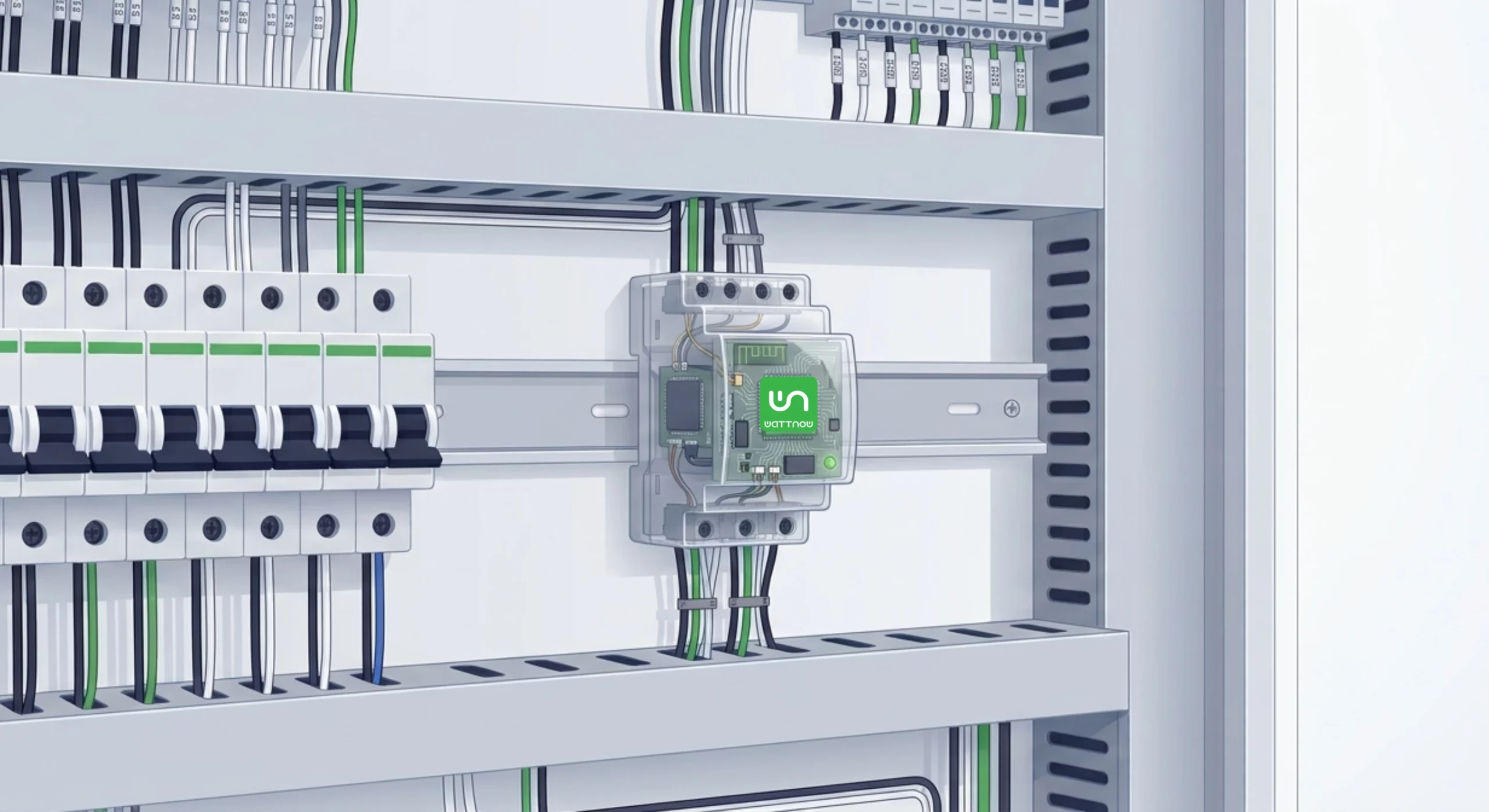
What an electricity usage monitor actually does, the different types available, the mistakes to avoid, and how to use one to spot waste before it shows up on your bill.
Key Takeaways
- An electricity usage monitor gives continuous visibility into consumption, not a single monthly figure.
- It ranges from plug-level devices for one appliance to site-wide systems covering an entire facility.
- Four common levels exist: plug-level, circuit-level, panel-level, and site-level monitoring.
- The most common mistake is monitoring without acting on the data, or monitoring at the wrong granularity.
- For an industrial site, the goal is one unified platform, not a set of disconnected devices.
What Is an Electricity Usage Monitor?
An electricity usage monitor is a device or system that tracks how much electricity is being consumed, when, and where, giving continuous visibility instead of a single monthly number.
You'll also see it referred to as a monitor for electricity usage or simply electricity monitor usage tracking, all describing the same function. It ranges from simple plug-in devices for a single appliance to facility-wide systems covering an entire industrial site.
What separates a basic monitor from a useful one isn't the hardware itself, it's whether the data reaches someone, or some system, in time to act on it.
📌 The core idea: instead of finding out you used too much electricity after the bill arrives, an electricity usage monitor tells you in the moment.
How Does an Electricity Usage Monitor Work?
It places a sensor at a measurement point, transmits the readings to a display or platform, and presents the result as a live figure, a trend, or an alert.
1. Measurement Point
A sensor or clamp is placed on the circuit, panel, or appliance you want to track. The choice of point determines what level of detail you get.
2. Data Transfer
Readings are sent, by wire, Wi-Fi, or a wireless protocol, to a display, an app, or a central platform.
3. Visualization
You see consumption as a live figure, a curve over time, or an estimated cost, usually with the ability to compare periods.
4. Alerts
More advanced monitors flag unusual spikes or equipment left running outside normal hours, without requiring someone to watch the dashboard constantly.
Electrical Monitoring Devices: Which One Do You Need?
The right device depends on what you're trying to answer: total consumption, peak load, or the breakdown between equipment.
Electricity Usage Monitor
The broad category covered in this guide. Tracks consumption continuously, from a single point or across a whole facility, and is the foundation for any monitoring for electricity usage strategy.
Power Consumption Monitor
Often used for instantaneous load (kW) rather than accumulated energy (kWh), useful for understanding peak demand. We cover the difference in detail in our power consumption monitor comparison guide.
Energy Consumption Meter
The metering hardware itself, measuring actual energy used. See our energy consumption meter explainer for the full breakdown.
Electricity Consumption Monitor
Usually refers to the dashboard layer, the software and display that lets you actually see and act on the data in real time.
The Four Levels of Electricity Monitoring
Monitoring happens at one of four levels: plug, circuit, panel, or site, each trading off cost against the amount of detail you get.
Plug-Level
A single device tracks one appliance. Cheapest, most detailed for that one item, impractical to scale to a whole building.
Circuit-Level
One meter per circuit breaker. Good middle ground for isolating specific zones, machines, or departments.
Panel-Level
One meter per distribution panel, capturing everything downstream of it as a single block. Faster to deploy, less granular.
Site-Level
One meter at the main incoming line. The cheapest to deploy, but the closest in spirit to a basic utility smart meter.
Most facilities benefit from a mix: site-level for the global picture, circuit or panel-level for the equipment that actually drives the bill.
Why Use an Electricity Usage Monitor?
The main benefit is catching waste and inefficiency while it's still happening, rather than discovering it after the cost is already locked in.
- Catch waste, idle equipment, lighting left on, before it adds up
- Understand which department, line, or appliance drives your bill
- Build a habit of checking consumption, not just reacting to invoices
- Support energy-saving decisions with data instead of guesses
- Quantify the result of a change, a new schedule, a repair, an upgrade, instead of assuming it worked
Common Mistakes When Monitoring Electricity Usage
Monitoring without acting
A dashboard nobody checks produces data, not savings. Alerts and a clear owner of the data matter more than the hardware itself.
Wrong granularity
Site-level monitoring alone can't tell you which machine is wasting energy. Match the monitoring level to the decision you actually need to make.
Disconnected devices
Several standalone monitors with no shared platform create more dashboards to check, not more insight. Centralizing data is what makes comparison possible.
How to Monitor Electricity Usage in a Facility
For a single appliance, a plug-in monitor is enough. For a facility, you need multiple measurement points feeding into one platform, not a collection of disconnected devices.
Start by identifying your three or four largest electrical loads, these are usually HVAC, production equipment, refrigeration, or lighting, and monitor those first. Site-wide coverage can follow once the highest-impact points are in place.
If you're weighing a power consumption monitor against an electricity consumption monitor for that kind of deployment, our dedicated comparison breaks down the selection criteria, including how to choose for industrial facilities.
Real-Time Monitoring vs Periodic Readings
Periodic readings, checked daily or weekly, are useful for trend analysis; real-time monitoring is what allows a response within minutes of an anomaly.
Both have a place. Periodic review is enough for spotting slow drift over a season. Real-time monitoring is necessary when the cost of a missed anomaly is high, a stuck compressor, a failed sensor causing equipment to run nonstop, or a demand peak that triggers an extra charge.
How Wattnow Unifies Your Monitoring
One Platform, Every Measurement Point
Wattnow connects to your electricity usage monitors, wherever they're installed and at whatever granularity you've chosen, and brings the data into one real-time dashboard with automated alerts. Clients typically cut their electricity costs by 10 to 30%, while avoiding an average of 20,000 tonnes of CO2 across the Wattnow client base.
Related Reading
Frequently Asked Questions
It's a device or system that tracks electricity consumption continuously, giving real-time visibility instead of a single monthly figure.
A power usage monitor generally focuses on instantaneous load (kW), useful for tracking peaks, while an energy consumption meter measures accumulated energy used over time (kWh).
It collects readings from sensors placed on circuits or equipment, transmits them to a platform, and displays them as real-time figures, trends, or alerts.
The underlying principle is the same, but the scale differs. A single appliance typically needs one plug-in monitor, while a factory needs multiple measurement points unified in one platform.
Start with your three or four largest electrical loads, often HVAC, production equipment, or refrigeration, rather than trying to monitor everything at once.
A weekly report is enough for slow trends. Real-time monitoring matters when the cost of missing an anomaly quickly is high, such as a stuck compressor or a demand peak.
Installing monitors without a clear process for acting on the data. The hardware only produces numbers; savings come from someone or something responding to them.
See Your Electricity Usage in Real Time
Wattnow gives you one dashboard for every monitoring point in your facility.
Book a Free Demo