

Energy ratings (A to G): EPC, consumption and rental bans
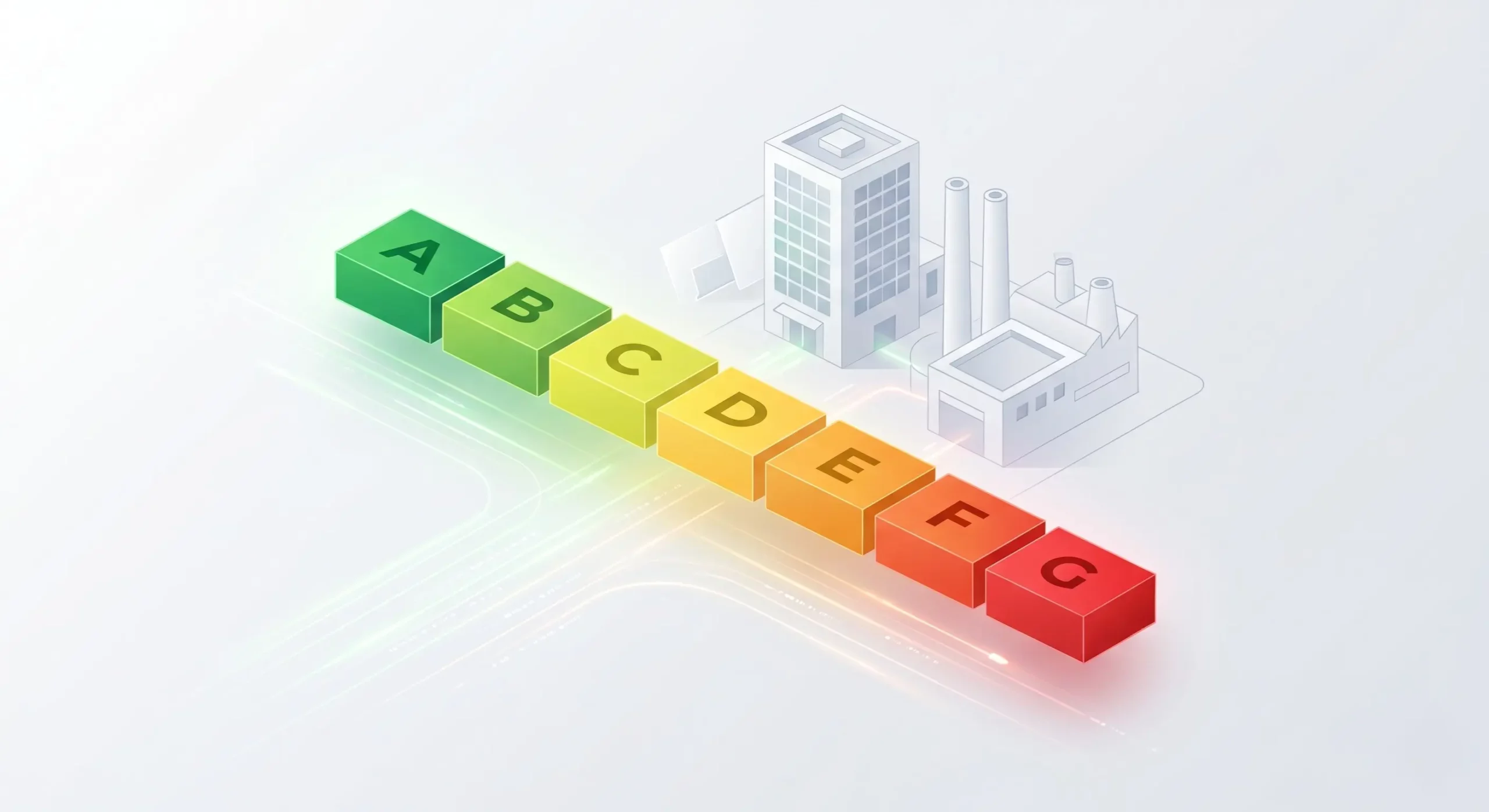
Energy ratings (A to G) classify homes and appliances according to their energy consumption and CO₂ emissions.
The Energy Performance Certificate (EPC) rates buildings from A (very efficient, < 70 kWh/m²/year) to G (energy sieve, > 450 kWh/m²/year). Classes F and G are subject to progressive rental bans in France (G from 2023, F from 2028) and a rent freeze since August 2022. For household appliances, the energy label has ranged from A (most efficient) to G (least efficient) since March 2021.
Key takeaway: A home rated F (331-420 kWh/m²/year) or G (>420 kWh/m²/year) is considered an "energy sieve". The best rating is A, the worst is G. A class A appliance can consume up to 70% less energy than a class G model.
What is an energy rating?
An energy rating is a standardized indicator that measures the energy efficiency of a building (via the Energy Performance Certificate - EPC) or a household appliance (energy label). The scale runs from A (very efficient, low consumption) to G (very inefficient, high consumption). This tool allows consumers and investors to easily compare energy consumption and carbon impact.
Since 2021, the European appliance label has been tightened: former A+++ ratings have become B or C, encouraging further innovation. At the same time, the EPC for homes was reformed to become more reliable and legally binding.
The 7 energy ratings for homes (A to G)
| Rating | Consumption (kWh/m²/year) | Qualification | CO₂ emissions (kg/m²/year) |
|---|---|---|---|
| A | < 70 | Very efficient (low energy) | < 6 |
| B | 71 - 110 | Efficient | 7 - 11 |
| C | 111 - 180 | Economical | 12 - 20 |
| D | 181 - 250 | Average consumption | 21 - 35 |
| E | 251 - 330 | Energy-intensive | 36 - 50 |
| F | 331 - 420 | Very energy-intensive (energy sieve) | 51 - 75 |
| G | > 420 | Extremely energy-intensive | > 75 |
📌 Mandatory EPC: since January 1, 2023, an EPC is mandatory for any sale or rental of a home in mainland France. It must be carried out by a certified diagnostician.
Which is the best energy rating, A or F?
The best energy rating is A. A home rated A consumes less than 70 kWh/m²/year, while a home rated F exceeds 330 kWh/m²/year (nearly 5 times more). For appliances, a class A refrigerator consumes about 110 kWh/year compared to 350 kWh/year for a class G model — a difference of over 65%.
Real-world example: Over 10 years, a class A refrigerator saves about €480 compared to a class G model (240 kWh/year × €0.20/kWh × 10 years).
What is class E?
Class E corresponds to an energy-intensive home with consumption between 251 and 330 kWh/m²/year. These homes consume a lot of energy (often 3 to 4 times more than an A-rated home) and emit around 36 to 50 kg CO₂/m²/year. They are not yet banned from rental (only classes F and G are), but renovation work is strongly recommended to reduce energy bills and improve thermal comfort.
Why is a home rated F or G?
A home is rated F (331-420 kWh/m²/year) or G (>420 kWh/m²/year) mainly because of:
- Insufficient insulation (roof, walls, single-glazed windows)
- Outdated heating system (old oil or gas boiler, electric resistance heaters)
- Lack of ventilation or a faulty MVHR system
- Thermal bridges and poor air tightness
These "energy sieves" are subject to progressive rental bans and a rent freeze.
F and G homes: rental bans and rent freeze
Under the French Climate and Resilience Law (2021), energy sieves (ratings F and G) are progressively banned from rental:
Ban on G
Homes rated G (most energy-intensive) can no longer be rented since 2023.
Ban on F
Homes rated F will be banned from rental starting in 2028.
Rent freeze
It is forbidden to increase rent for homes rated F or G.
How to improve your energy rating?
To move from F/G to a better rating (D, C or B), several types of work are recommended:
Insulation
Attic, external wall insulation (EWI) or internal (IWI), ground floors. Attic insulation is the most cost-effective measure.
Heating
Replace an old oil or gas boiler with an air-to-water heat pump or a wood pellet boiler.
Ventilation
Install a high-performance MVHR (mechanical ventilation with heat recovery) to reduce heat loss while renewing air.
Renewable energy
Solar thermal or photovoltaic panels to reduce primary energy consumption.
Financial aid: MaPrimeRénov', Energy Saving Certificates (CEE), eco-PTZ, reduced VAT at 5.5% for energy renovation work.
A to G ratings for household appliances
Since March 2021, the European energy label has been simplified: no more A+++, but a scale from A (most efficient) to G (least efficient). This applies to:
Refrigerators & freezers
Class A: ~100-150 kWh/year ; Class G: ~350-400 kWh/year.
Washing machines & dishwashers
Class A: ~50 kWh/year ; Class G: ~180-200 kWh/year.
TVs & screens
Class A can consume 3 to 4 times less than a class G model.
Drive your energy performance
Wattnow helps businesses and housing associations improve their energy rating through real-time monitoring: identifying overconsumption points, analyzing usage patterns, and creating action plans to reduce energy bills by 15-25%.
Real-time monitoring
Visualize consumption per equipment, detect anomalies.
Energy audit
Our tools provide the data needed for an EPC or regulatory audit.
Performance reports
Key performance indicators (EnPIs, SEUs) to track your rating improvement.
FAQ about energy ratings
Energy ratings range from A (very efficient) to G (very inefficient). For homes, the EPC is based on consumption in kWh/m²/year: A (<70), B (71-110), C (111-180), D (181-250), E (251-330), F (331-420), G (>420).
The best rating is A. An A-rated home consumes less than 70 kWh/m²/year, while an F-rated home consumes more than 330 kWh/m²/year.
Class E corresponds to an energy-intensive home (251 to 330 kWh/m²/year). These homes consume a lot of energy but are not yet banned from rental.
Mainly due to insufficient insulation (roof, walls, windows) and an outdated heating system (old oil or gas boiler).
An EPC is valid for 10 years. However, EPCs carried out between 2018 and 2021 remain valid until December 31, 2024.
Improve your company's energy rating
Wattnow supports you in reducing your energy consumption and achieving performance labels.
Contact a Wattnow expert