

CBAM Tunisia: Which industrial sectors are under pressure?
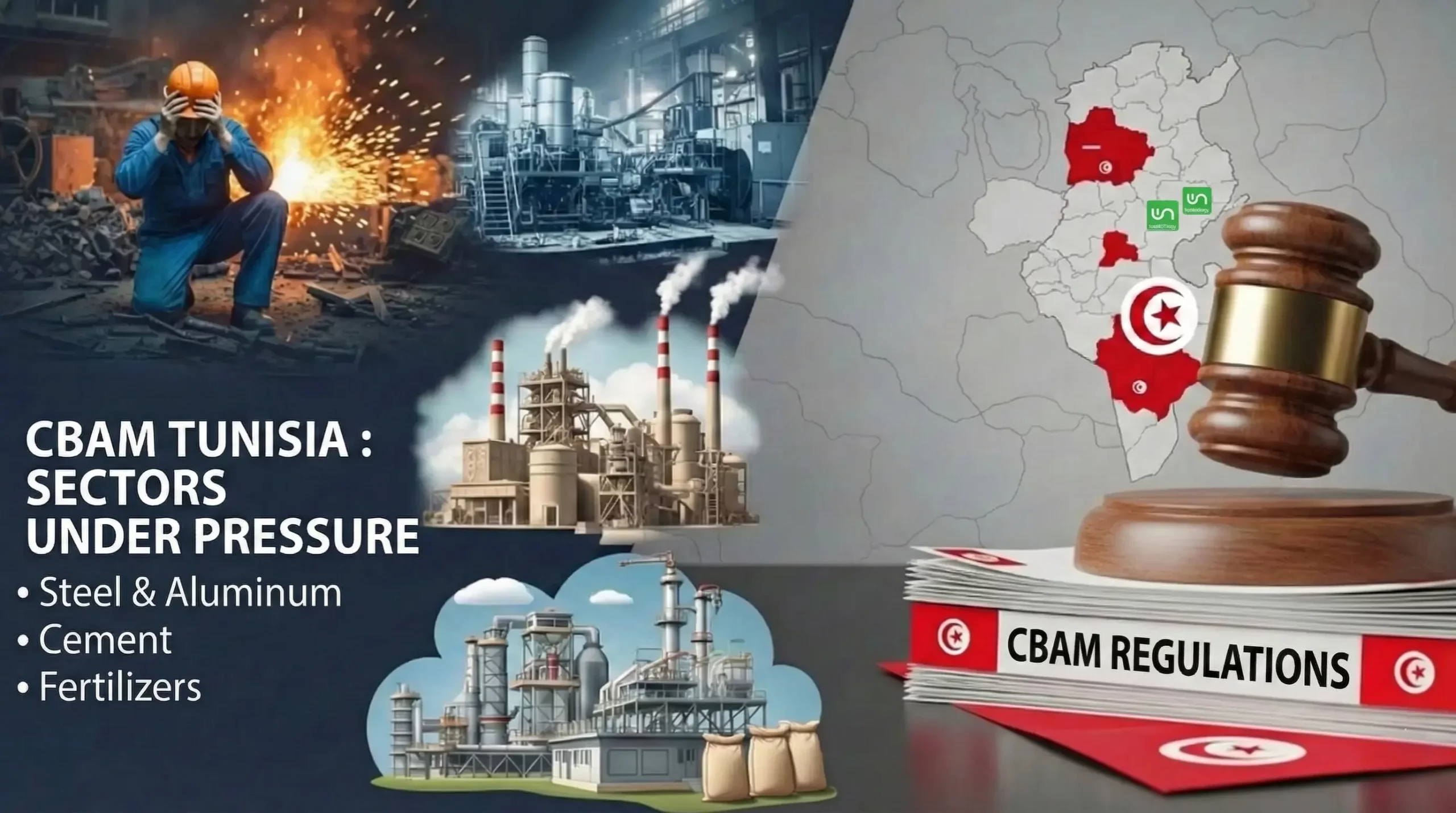
The CBAM (Carbon Border Adjustment Mechanism) is no longer just a European regulation. For Tunisian industrial companies exporting to the European Union, it marks a major strategic turning point.
From now on, the EU no longer limits itself to price or industrial quality: every exported ton must be accompanied by accurate, traceable and verifiable carbon data.
Factories capable of measuring, managing and rapidly reducing their emissions will strengthen their competitiveness. Those who delay will see their margins squeezed by carbon adjustments.
The rise of CBAM in Tunisia is forcing exporting manufacturers to rethink their energy and carbon management. This article analyzes the most exposed Tunisian sectors, the concrete requirements of CBAM, and explains how an energy management platform like Wattnow can transform this regulatory constraint into a lever for cost reduction, compliance and export competitiveness.
Which Tunisian sectors are really under CBAM pressure?
Tunisian sectors with high carbon intensity are the first concerned by CBAM, as their products are included in the first categories covered by the mechanism.
Cement and construction materials
Tunisia's cement sector is directly targeted by CBAM due to clinker-related emissions and intensive use of fossil fuels.
Steel and metallurgy
Tunisian steel producers operate energy-intensive value chains where CBAM imposes fine carbon accounting.
Chemicals and fertilizers
Strategic for Mediterranean agriculture, this sector faces high CBAM requirements for validation and certification.
Cement and construction materials: from clinker to carbon data
- Monitoring of embedded emissions per exported batch
- Regular carbon declarations to European partners
- Complete traceability: clinker, fuels, electricity, transport
How Wattnow supports cement plants
Real-time monitoring
Monitoring of electrical and thermal consumption of kilns, grinders and auxiliary equipment.
Performance analysis
Comparative analysis by production line, site and period to identify best practices.
Continuous optimization
Identification of waste and reduction of kWh per ton produced through artificial intelligence.
Transform CBAM into Competitive Advantage
Discover how Wattnow helps Tunisian industrial companies reduce their energy costs while preparing for CBAM requirements.
Steel and metallurgy: process complexity, differentiation opportunity
Chemicals and fertilizers: sensitive processes under CBAM scrutiny
Continuous measurement
Precise measurement of energy used in chemical reactions, steam, cooling and compressed air.
Structured reporting
Structured sustainability reports and support for ISO 50001 initiatives.
Proactive management
The industrial company manages its indicators and values its progress.
How Wattnow helps Tunisian industrial companies transform CBAM into an advantage
Immediate visibility
Real-time multi-site and multi-equipment monitoring with clear dashboards.
Cost reduction
10 to 30% energy savings observed among several clients.
CBAM compliance guaranteed
Automated tracking of carbon indicators and generation of CBAM reports.
Ready to Secure Your Exports to Europe?
Join Tunisian industrial companies already transforming CBAM into a competitive advantage.
FAQ – CBAM and Tunisian industries
Move from CBAM Risk to Competitive Advantage
Wattnow supports you with a proven solution on over 800 industrial sites worldwide.
Request a Personalized Demo